 Greenland Orchard Journal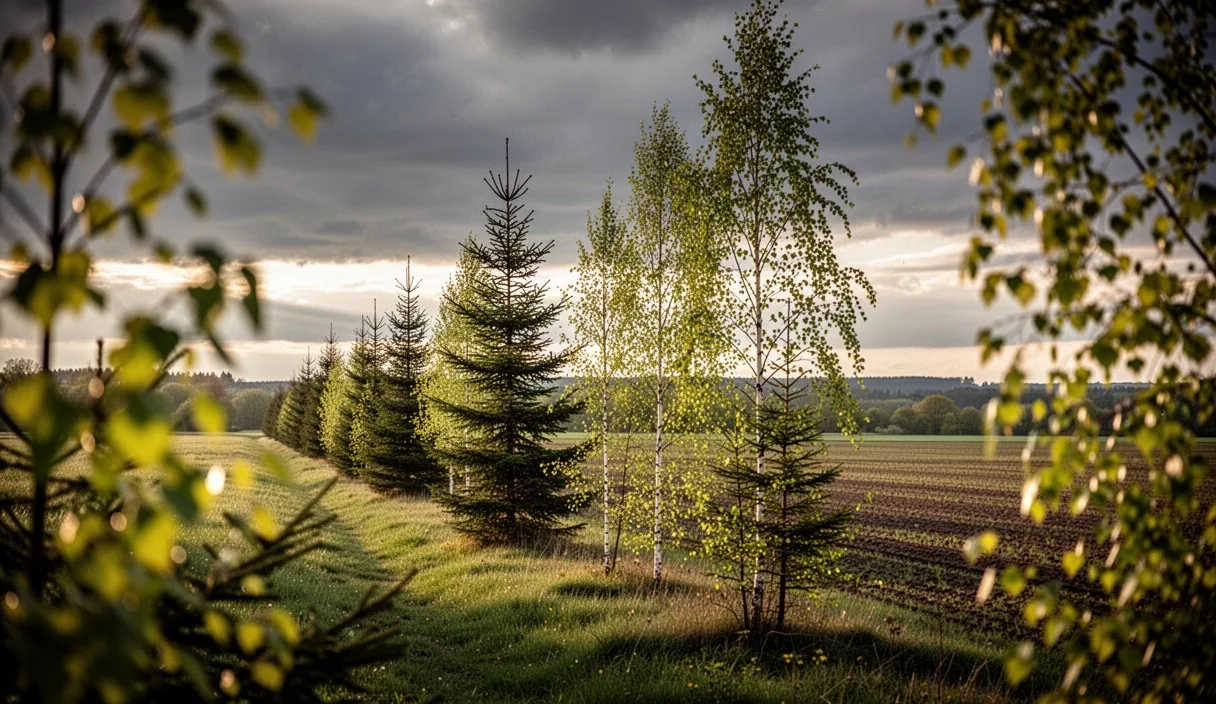
When you stand out on an open piece of land in late autumn or early spring, you feel the weather before you see it. Cold winds scour the soil, dry out young wood, and push garden beds harder than most plants can tolerate. Here at our small family nursery, we hear from folks every week who bought open acreage and discovered that planting fruit trees without shelter is an uphill battle. Young saplings lean under steady pressure, blossom drop spikes during spring gales, and the soil loses its moisture before tender roots can drink.
A hardy windbreak changes everything, but it is not something you want to plant twice. Selecting the right species and laying them out properly gives your homestead a protective boundary that lasts for generations. When you set up living wind barriers, you slow down harsh gusts, trap winter snow where your soil needs the moisture, and create a calm microclimate where orchards and livestock thrive. It takes patience and a tape measure, but getting these fundamentals settled before you dig will save you years of replanting.
Calculating shelter zones based on tree height
Every windbreak works by lifting the airflow up and over your open ground rather than blocking it like a brick wall. The distance your trees protect depends directly on their mature height, which foresters refer to as H. While you get a little bit of calm on the windward side, roughly two to four times the mature height of the barrier, the primary benefit happens downwind. You can expect significant reduction in wind speed across a distance equal to eight to ten times the height of your mature trees, with partial protection stretching out past twenty times that height.
To put that into numbers for your own plot, imagine you plant a windbreak that will grow to forty feet tall. The prime shelter zone behind that stand will extend between three hundred and twenty and four hundred feet downwind. Within this specific zone, wind velocity often drops by more than half. Out toward eight hundred feet, you still enjoy a gentle reduction in speed, but the wind gradually returns to its open-field velocity. If your orchard sits six hundred feet away from a forty-foot barrier, it receives moderate shelter, but moving your windbreak closer to the orchard brings the fruit trees into the quietest pocket of air.
Terrain alters these calculations quickly. If your land slopes downward from the prevailing wind direction, the protected zone stretches farther because the wind takes longer to dip back down to the ground. Conversely, if your ground slopes upward into the face of the wind, the wind compresses and returns to the surface much sooner. You also need to verify your prevailing seasonal winds. Summer storms might blow in from the southwest, but destructive, moisture-robbing winter storms often scream down from the north or northwest. If you only plan for one season, your orchard might stay exposed during the bitterest weeks of the year.
Mixing deciduous and evergreen species
A common instinct on open land is to plant a single row of dense spruce or cedar trees to stop the wind cold. In practice, a solid living wall acts just like a solid fence. The wind hits the wall, piles up, rolls over the top, and crashes violently down on the other side, creating turbulent eddies that can snap branches even worse than a steady breeze. The ideal homestead windbreak does not stop the wind; it filters it, allowing roughly forty to sixty percent of the air to pass through gently while pushing the bulk of the force upward.
To hit that sweet spot of permeability throughout the entire year, we always advise blending deciduous hardwood species with cold-hardy evergreens. Deciduous trees develop deep, anchoring taproots and branch out rapidly in their first decade, creating an open lattice of bare limbs that slows winter wind without creating vacuum turbulence. Evergreens, meanwhile, provide dense foliage down low where winter drafts sneak through. In summer, the broad leaves of the deciduous trees fill out to buffer hot, drying winds just as fruit trees enter their heaviest growth period.
Diversity also guards your land against pest outbreaks and disease. If a borer or blight strikes one species in a mixed belt, the remaining rows continue to hold the line while you replant. Below are dependable species for cold, exposed homestead plots:
| Tree Species | Type | Mature Height | Growth Rate | Best Windbreak Role |
|---|---|---|---|---|
| Eastern Redcedar | Evergreen | 30 to 40 feet | Medium | Dense mid-level barrier, drought tolerant |
| White Spruce | Evergreen | 50 to 70 feet | Medium | Year-round bulk, excellent winter cover |
| Ponderosa Pine | Evergreen | 60 to 80 feet | Medium | Deep anchor on dry, sandy, or alkaline sites |
| Hybrid Willow | Deciduous | 35 to 45 feet | Rapid | Quick early shelter, damp soil absorption |
| Bur Oak | Deciduous | 60 to 75 feet | Slow to Medium | Permanent long-term spine, deep wind resistance |
| Siberian Peashrub | Deciduous Shrub | 12 to 18 feet | Rapid | Windward snow trap and ground-level buffer |
When you place these together, you build structural resilience. Fast-growing willows or poplars establish the initial wind curtain within four to five years, sheltering the slower-growing oaks and spruces while they develop sturdy root systems. Once the long-lived hardwoods reach maturity, the early pioneer trees can be thinned for firewood or left to complete their natural cycle.
Planting multi-row barriers for wind deflection
If you have the acreage to spare, a multi-row barrier performs far better than any single line of trees. Single rows leave no room for error; if two trees die, you have an open funnel that concentrates the wind right toward your homestead. A three-row or four-row system creates an inclined ramp that guides air upward smoothly, reducing ground-level speed across a much broader footprint.
We recommend laying out your rows using a staircase design from the windward side inward:
- The outer windward row: Low-growing, dense shrubs such as Siberian peashrub, buffaloberry, or American hazelnut. This row catches blowing snow before it piles onto your inner rows and prevents ground-level drafts from scouring beneath the taller canopies.
- The center row: Tall deciduous canopy trees like bur oak, green ash, or hackberry, mixed with fast-growing hybrid willows. This row forms the structural peak of your barrier, forcing the bulk of the air currents upward.
- The inner leeward row: Hardy conifers such as white spruce, red pine, or eastern redcedar. This row absorbs the air that slips through the deciduous center and maintains foliage density near ground level during cold winter months.
Give yourself adequate spacing between rows to keep the plants healthy. Rows should sit twelve to sixteen feet apart, which allows enough sunlight to reach the lower branches and provides plenty of room to drive a tractor or mower between them for maintenance. Within each row, stagger the trunks rather than planting them on a square grid. Staggering closes sightlines, meaning the wind cannot find a straight corridor through the shelterbelt even when trees are young.
Spacing distances from productive fruit trees
Fruit growers often want their windbreak as close to the orchard as possible, but planting too close creates serious problems. Mature forest trees develop massive root plates that travel outward well beyond their branch canopies. If your windbreak roots share the same soil zone as your apple, pear, or plum trees, the larger wild species will strip away water and nitrogen, leaving your fruit trees stunted.
A safe standard is to leave at least thirty to fifty feet of open lane between your innermost windbreak row and the first row of productive fruit trees. This distance keeps aggressive roots from sapping your orchard soil. It also guarantees that the tall shelter trees will not cast shade over your fruit trees during the morning and afternoon. Most orchard varieties need six to eight hours of direct sunlight each day to set fruit buds and ripen a clean crop; crowding them behind a forty-foot pine tree cuts your yields substantially.
You also need to think about air movement and frost. While you want to break howling winds, you never want dead, stagnant air inside an orchard. Gentle air circulation dries off morning dew, which stops fungal diseases like apple scab and powdery mildew from taking hold. Furthermore, cold spring air behaves like water, flowing downhill toward low ground. If you plant a dense, uninterrupted windbreak across the bottom of a slope, it creates a dam. Heavy, freezing air collects behind that dam on calm spring nights, killing your fruit blossoms. Leave openings or stagger the ends of your rows so cold air can drain away safely down the valley.
Initial weeding and irrigation for rapid shelter
The first two seasons determine whether a windbreak succeeds or languishes. When you set small bare-root saplings into open pasture or sod, they face aggressive competition from native grasses. Dense sod possesses millions of tiny feeder roots that capture every drop of light rainfall before it reaches the deeper root zone of your young trees. Without intervention, grass will choke out saplings within twelve months.
Clear a strip of sod at least four feet wide along every planting line. You can scrape this clear with equipment, till it thoroughly, or lay down heavy cardboard sheet mulch covered with six inches of untreated wood chips. Synthetic woven weed barrier fabric works well on large rural layouts, but you must monitor it annually to ensure field mice and voles do not build nests beneath the fabric where they can chew the bark off your tree trunks during winter.
Establish a regular watering schedule to push deep root growth. Relying solely on rainfall on open plots usually results in heavy losses during hot summer stretches. We recommend the following schedule during the first two growing seasons:
- Provide five to ten gallons of water per tree once every seven to ten days during dry summer weather, applying it slowly so the water soaks straight down rather than running across parched topsoil.
- Cut back watering by late summer to help the young saplings harden off their fresh green wood before the first hard freeze of autumn arrives.
- Give every tree a deep soaking in late autumn, just before the soil freezes solid, which ensures evergreens have internal moisture reserves to survive dry winter winds.
Protecting the trunks from wildlife is just as critical as watering. Open land is home to rabbits, voles, and deer who view young tree rows as an easy meal. Rigid plastic tree tubes or three-foot cylinders of wire hardware cloth pressed two inches into the dirt will keep rodents from girdling the thin bark when snow covers their usual food sources.
Common mistakes to avoid
One frequent mistake is planting only a single species across the entire plot. It looks tidy on day one, but if a disease like emerald ash borer or spruce needle cast sweeps through your county, your entire windbreak can die within two seasons, leaving your orchard completely exposed. Always plant at least three distinct species from different botanical families.
Another common misstep is planting saplings too deep. The root flare, which is the spot where the trunk widens out into the uppermost roots, must sit right at the soil level. Burying the flare suffocates the roots, causes collar rot, and stalls top growth for years. Take the extra five minutes per tree to set your planting depth accurately.
Finally, avoid ignoring the local bylaws and easements. Shelterbelts grow large, and their branches or roots eventually cross property lines. Planting trees right up against a boundary fence can lead to disputes with neighbors or issues with utility companies if tall canopies reach power lines. If you are unsure where your lines lie or whether utility rights-of-way cross your planting zone, talk to your local county extension office or a licensed surveyor before ordering your planting stock.
Practical next steps for your homestead
Start your project on paper long before you pick up a shovel. Walk your property lines on a blustery afternoon and observe how the wind flows across the land. Note the corners where snow piles deepest and check where the ground dries out first in summer. These observations give you real clues about airflow that standard maps will not show.
Next, sketch out your plot on grid paper, marking your prevailing winter wind direction, your orchard location, and any structures you wish to protect. Check that you have preserved at least thirty feet between your fruit trees and your proposed windbreak, and mark a safe drainage lane at the low end of your slope so spring frost can roll away. Measure your linear footage so you know precisely how many trees you will need at your chosen spacing intervals.
Get in touch with your local soil conservation district or state forestry nursery by mid-winter. These agencies often offer hardy bare-root native conservation bundles at modest prices for homesteaders planting windbreaks. By placing your order early, preparing your ground strips before the ground freezes, and choosing tough species built for your climate, you give your future orchard the shelter it needs to flourish for decades to come.